

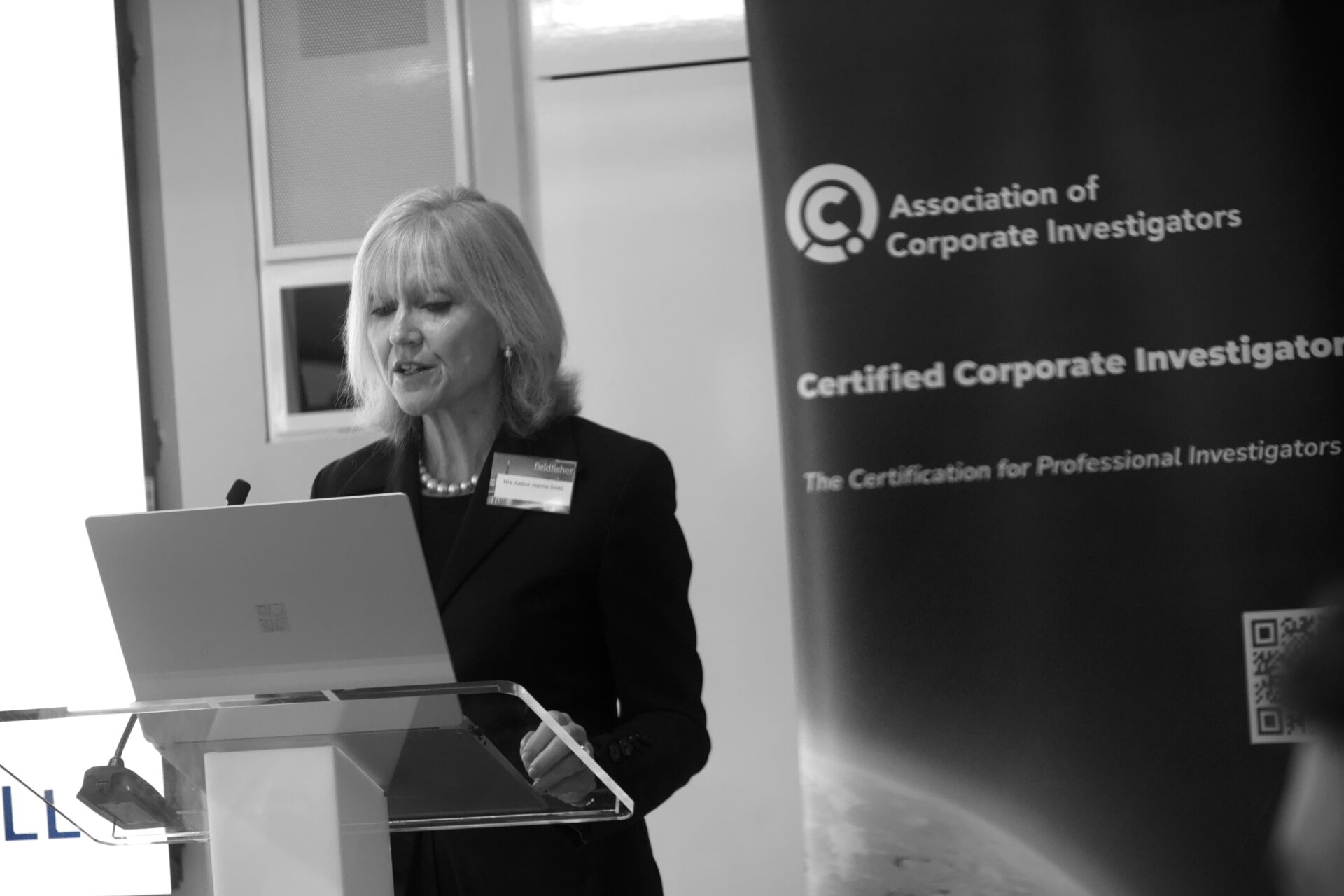
Justice Joanna Smith Keynote for the ACi Symposium 2026
Good morning and thank you for inviting me to take part in this conference. It is a real privilege to be here. Sorry I cannot be here later.
As I am sure you will all know, AI tools are now in widespread use in litigation. Guidance on the responsible and appropriate use of AI has been issued by the Bar Standards Board and the Solicitors Regulation Authority. Guidance has also been issued to the Judiciary which seeks to ensure that the use of AI by the judiciary is consistent with its overarching obligation to protect the integrity of the administration of justice and uphold the rule of law.
However, you may be less clear about the approach the court takes to the use of AI tools by legal professionals and the experts they retain to assist them, together with the precautions that you as investigators should be taking when using AI for your work.
I am going to cover three main topics in this speech: first the current approach of the court to the use of AI; second what, if any, disclosures you as investigators might wish to make to your instructing solicitors about its use; and third how you might approach disclosure about your use of AI in connection with the preparation of an expert report that will be deployed in court. In connection with that third topic I shall be touching on the recommendations for AI use by expert witnesses made in the recent report by the Civil Justice Council on the use of AI in Court Documents.
The Court’s Approach to the use of AI
It is important to be clear that the courts and judiciary are not opposed to the use of AI. It can of course reduce administrative burdens and improve access to justice.
The modern justice system increasingly relies on technology and in recent years it has embraced electronic bundles, remote hearings, digital filing systems and online processes. It is generally recognised that our justice system owes a duty to those we serve to make constructive use of whatever technology is available if it helps to provide a better, quicker and more cost effective service to the public.
Equally it is recognised that AI use by litigants, their solicitors and other professional advisors, including as a tool to support legal and investigatory work, is inevitable.
The issue is not whether AI may be used by investigators (and many of you will be using it already), the issue is how it may be used by you responsibly and safely within the parameters of what will be acceptable to the Court.
It may help to begin by observing that the Court is likely to have three primary concerns when it comes to your use of AI. These are accuracy, accountability and transparency.
As to accuracy, it is axiomatic that materials that are put before the Court should be accurate. Most of you will, I am sure, be aware that the key risks of AI use include hallucinations, confidentiality breaches and technical misunderstandings. Generative AI can produce output that appears convincing but is entirely wrong. It may invent legal authorities, misstate facts, misunderstand context or overstate confidence in a conclusion. The more persuasive the language, the greater the danger of accepting it uncritically.
Importantly from the perspective of an investigator, who may be using AI to assist reasoning rather than merely to retrieve information, AI is known to reinforce or amplify existing human confirmation bias. By confirmation bias I mean the tendency to notice, seek out, interpret and remember information in ways that support what we already believe, while giving less weight to information that challenges those beliefs.
As to accountability, the court will expect to know who is responsible for the evidence before it and that responsibility cannot simply be delegated to an AI agent, much as we might wish to anthropomorphise that agent.
As to transparency, the court must be able to understand how a conclusion has been reached. If you as an investigator cannot explain how you have obtained the information or the process you have employed to generate it, confidence in your conclusion may be undermined. If AI has materially assisted an analysis, then you should assume that someone may eventually want to know how it did so.
What Investigators should tell their instructing solicitors
You will all know a great deal more about the ways in which you are instructed by solicitors than I do. You may already be receiving instructions that ask for transparency around your use of AI.
However, if you are not receiving instructions of that type and have never considered it necessary to discuss your AI use with your instructing solicitors, then that appears to me to present a significant potential risk for the litigation process. No one likes surprises at any stage of litigation, much less surprises that should have been avoided. Early transparency around your use of AI will enable your instructing solicitors to make informed decisions about how that use should be managed from a legal or evidential perspective.
Bear in mind that if the information you are providing to solicitors is to be used in a witness statement by that solicitor, he or she has duties to the court as to the accuracy of that evidence. He or she will also have to ensure compliance with confidentiality obligations, privacy issues, data protection requirements and contractual restrictions which may limit or completely constrain the use of AI, or, at the very least, require an understanding of the AI tool that has been used and the safeguards that are in place to ensure that private and privileged information remains that way.
A failure to tell your instructing solicitor how the information has been gathered or generated, or that there are risks involved in taking the information at face value, might in turn result in the submission of misleading evidence to the court and, potentially, a breach by your solicitor of his or her duties.
So what sort of information will your solicitor be interested in? Well, I confess that my views on this subject have, as you will see in a moment, been shaped by the work that I have done on the CJC report, but I hope that they will be of more general application.
I suggest that you might think about disclosing to your solicitors the answers to questions which I can loosely place into six categories. In fact you might even consider producing a disclosure checklist for use in every case which could help you to record your AI use contemporaneously and provide your instructing solicitors with information that they may need for disclosure, case management and evidential purposes. The six categories are as follows:
First – what AI tool are you going to use? For example, is it Chat GPT, Microsoft CoPilot, Gemini, a specialist e-disclosure platform or investigation analytics software.
Second - what will you ask the AI tool to do? Broadly this might fall into three categories: administrative, information processing and analytical tasks. Administrative tasks may be relatively easily identified – they include grammar or style checking, formatting and drafting routine correspondence. Information processing will involve more sophisticated tasks such as summarising material, transcription, translation, creating chronologies, categorising documents, searching databases or identifying other potentially relevant materials. Analytical tasks might involve drafting text, analysing patterns, financial or data analysis communications or link analysis, anomaly detection or some other analytical task. This question is important because the risks attached to the use of AI differ depending upon the nature of that use and the extent to which it ultimately influences or generates any substantive conclusions. The first category is the least risky and may give your solicitors no cause for any concern. The third category is the most risky because the tasks involved are likely to influence the end result. However I also recommend significant caution in relation to the second category. An AI summary of a document may not pick up a crucial feature that would have jumped out at you. AI transcription may create substantive content that does not accurately reflect what was said. You need to ensure at all times that you understand what the AI tool you have chosen is capable of. Focussing on its function ensures that you have a better understanding of the risks surrounding its use.
Third, what verification procedures will you put in place? This includes questions such as how you ensure that the output is accurate, whether you employed any statistical or sampling checks, what if anything has been checked manually, including by an independent reviewer, and whether any errors, inaccuracies or hallucinations were identified and, if so, how they were corrected. If there is a risk of confirmation bias, perhaps because of the use of prompts based on a particular hypothesis, I would also suggest that you deal with the question of what steps you have taken to interrogate the AI tool on what evidence might falsify your conclusions, what alternative explanations may exist, what facts you might be overlooking and so forth. In general terms, it can be very difficult to determine whether the output of an exercise conducted using AI is reliable without understanding the details of the verification process.
Fourth, are you intending to enter confidential or personal information into the AI system and, if so, how secure is that system? Is there any danger of personal data, confidential or legally privileged information or sensitive investigative material finding its way into the public domain?
Fifth, will your use of the AI tool influence or contribute to any substantive conclusions? If so you may need to think about how it contributed to that conclusion and whether you remain comfortable with the conclusion.
Sixth, what records do you keep as to your AI use? This may be a relevant consideration for your solicitors in connection with disclosure. The sorts of records I have in mind include the information that was input into the system, the prompts or instructions given to the AI, the AI outputs relied upon, notes and records made during the verification process, source data used and methodology notes.
Ultimately each of you is responsible for your use of AI, but I would suggest that whenever that use has played a meaningful role in carrying out your investigative work or generating a substantive conclusion it should be disclosed to your solicitor.
Disclosure of the use of AI in the context of the preparation of an expert report
Many of you will, on occasions, be instructed to give evidence as experts to the court, requiring you to produce expert reports and I am sure that you will all be familiar with your duties to the court in this regard.
Now, as I said in a lecture I gave to the Bond Solon Expert Witness Conference a couple of weeks ago, the advent and rapid development of AI has not changed, and will not change, those duties. The obligations of independence, objectivity, transparency and professional competence remain exactly the same as they were before the emergence of AI.
As many of you will know, the Civil Justice Council is an advisory public body that reviews civil justice and makes recommendations designed to improve the system. I was co-chair of the working group that produced its recent report on the use of AI in court documents, including expert reports.
In broad terms, the CJC report attempts to reflect a balanced approach to the opportunities and risks presented by AI. Experts must already verify their reports with a statement of truth designed to support compliance with their duties, but was it necessary, we asked in our consultation, for them to declare AI use?
The answer we received from those responding to the consultations was overwhelmingly Yes.
This chimed with the views of the Working Group and also with guidance issued earlier this year by the Academy of Experts, with which many of you will be familiar. Thus we concluded that the integrity of expert evidence, including the need for proper scrutiny of the expert’s methodology and the maintenance of a level playing field between experts, requires a degree of transparency around the use of AI which can only be achieved by the introduction of a new AI use specific declaration. We have recommended a rule change to that effect.
Importantly, that declaration would only be required where an expert has used AI tools to generate or influence the substantive content of his or her report – this will include where the AI use formed part of an expert’s methodology or substantive analysis (hence my emphasis on these things earlier in this speech). That goes directly to the integrity of the expert output, together with the need for human accountability and verification. Where a declaration is required we believe that it will need to provide sufficient information to facilitate effective scrutiny of the expert evidence. The report envisages that (consistent with the questions I have already suggested you should be asking yourselves about AI usage) this may include disclosure of the methodology used together with confirmation as to the appropriateness of AI use for that purpose and, exceptionally, but not always, the tool that has been used.
At the same time, and recognising the need for guidance in this area we have recommended that revisions should be made to the CJC’s Guidance for the Instruction of Experts in Civil Claims (2014) to introduce good practice guidance on AI use by experts into revised Guidance.
We have indicated our view that this guidance needs to facilitate consideration and application of a three-part test: first experts should consider whether their use of AI has generated or influenced the substance of their evidence; second (and if a declaration needs to be made) they should consider what information should be disclosed to enable the opposing party and the court to scrutinise their methodology and analyse it effectively; and third they should consider whether it is necessary in the particular circumstances to disclose the AI tool used.
Many of you may work alone, but others will work in organisations that use teams to analyse material and carry out research. Where you work in a team, you will need to ensure that you understand what AI tools your team is using and how they have been used (even if you have not used them yourself). You will also need to ensure that there is a strict protocol in place to ensure that everyone in the team understands the importance of you, as the expert, being clear about what use they have made of AI.
Where your report is being relied upon as expert evidence you must be prepared to explain to the court why you have used AI, what tasks it performed, any limitations it may have, the verification process, the extent to which AI contributed to or influenced that opinion and why the opinion expressed in your report remains an opinion for which you take ultimate responsibility.
On a lighter note, if you have used AI when preparing an expert report, remember that opposing counsel may become extremely interested in your prompt engineering skills…
Circling back, the way to guard against the risks caused by the use of AI in the context of acting as an expert in court has its foundation in the fundamental duties of an expert. The need to verify all factual assertions, references and conclusions. To take nothing at face value. Tor provide your own independent opinion in your own words.
Conclusion
The genie is out of the bottle as far as AI is concerned. But that does not mean that we should approach its use with an uncritical eye. On the contrary, it should be approached with the caution that will come naturally to any forensic investigator, whose ultimate conclusions will be the subject of scrutiny. Accuracy, accountability and transparency should be the essential safeguards.
AI may assist analysis but it cannot replace professional expertise, independent judgment or personal responsibility.
Thank You.
JS